Texas Sexual Abuse Lawyer for Survivors
You decide what happens next. We hold abusers and the institutions that protected them accountable, confidentially.
Request a Confidential Consultation
Tell us what happened. An attorney will call you back, usually within the hour.
No fee unless we win · Confidential · Se habla español
You've Seen Us On



































Quick answer: In Texas, a survivor of sexual abuse can bring a civil lawsuit for money damages against the person who committed the abuse and, in many cases, against the church, school, camp, employer, or other organization that hired, supervised, or protected that person. A civil case does not require a criminal charge or conviction, and courts can allow survivors to file under initials or a pseudonym. Survivors of child sexual abuse have at least 30 years after their 18th birthday to file many claims, and adult survivors generally have five years. The conversation with a lawyer is confidential, and you decide whether a case moves forward.
If you are reading this, you may have carried what happened for a long time. You may not be sure it counts, whether anyone will believe you, or whether it is too late. Those are the questions survivors ask us most, and the answers are often better than people expect.
This page explains how civil sexual abuse cases work in Texas: who can be held responsible, how institutions are held accountable, how long you have, how your privacy is protected, and what a case can recover. We represent survivors across Texas. When you are ready, you can reach us confidentially at (817) 203-2220. If you are in danger right now, call 911. The RAINN National Sexual Assault Hotline is available any time at 800-656-4673.
Meet your Texas injury attorneys.
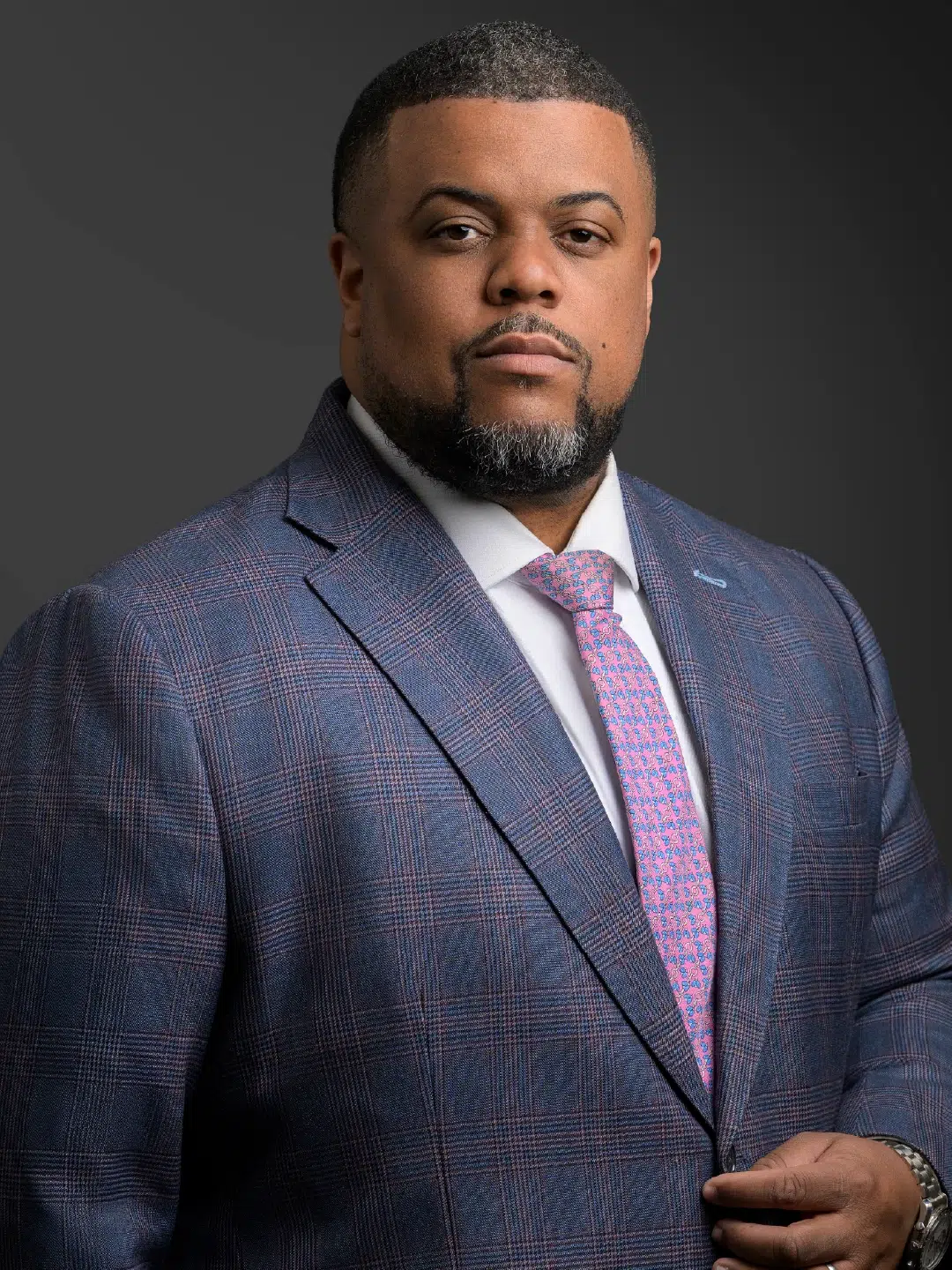
- Leads the firm’s Fort Worth personal injury practice
- Super Lawyers Rising Star (2025)
- Fort Worth Inc. 40 Under 40 (2025)
- Fellow, Texas Bar Foundation (2024)

- Former prosecutor & former insurance-defense attorney
- Multiple seven-figure verdicts & settlements
- Trucking, oilfield, industrial & TBI cases
- Lawdragon 500 Leading Plaintiff Consumer Lawyers (2024, 2025)

- Founder of Varghese Summersett
- Former insurance adjuster before law school
- Tried 100+ cases before Texas juries
- Former prosecutor, Board Certified in Criminal Law

- Texas Tech University School of Law
- Outstanding Brief Award, Duberstein National Moot Court
- Certified Mediator
- Began at the firm in client relations
Civil Claims for Sexual Abuse in Texas
A criminal case and a civil case are two separate things. In a criminal case, the State prosecutes the abuser, and the goal is punishment. In a civil case, you are the one bringing the claim, and the goal is accountability and compensation for what was done to you.
- No criminal case is required. You can bring a civil claim whether the abuser was never reported, was investigated but never charged, was acquitted, or was convicted.
- The standard of proof is lower. A civil jury decides whether the claim is more likely true than not, not whether it is proven beyond a reasonable doubt.
- You control the case. In a criminal case, the prosecutor decides what happens. In a civil case, you decide whether to file, whether to settle, and whether to go to trial.
- Organizations can be held responsible. A criminal case only reaches the abuser. A civil case can reach the institutions whose failures made the abuse possible.
A conviction can help a civil case, but its absence does not hurt your right to bring one. Many of the strongest institutional cases were never prosecuted at all.
Institutional Sexual Abuse: Holding Organizations Accountable
Abusers rarely act in a vacuum. They are often given access to children or vulnerable adults by an organization that trusted them, failed to check their background, ignored warning signs, or moved them somewhere new after complaints. Texas law allows survivors to hold those organizations responsible for their own failures.
The legal claims against an institution usually include:
- Negligent hiring. The organization failed to screen the person or ignored what a background check or reference would have shown.
- Negligent supervision and retention. The organization knew or should have known about warning signs or prior complaints and kept the person in a position of access anyway.
- Failure to protect and failure to follow its own policies. Many organizations have rules about one-on-one contact, overnight trips, and reporting. A failure to enforce them is strong evidence.
- Failure to report. Texas law requires anyone who believes a child is being abused to report it, and professionals such as teachers and caregivers face stricter reporting rules. An organization that buried a report instead of making one can be held responsible for what happened next.
- Cover-ups. Moving an abuser to a new location, pressuring families to stay quiet, or destroying records can support punitive damages.
The kinds of institutions involved in these cases include churches and ministries, summer and church camps, private schools, youth sports programs and coaches, daycares and after-school programs, medical offices and massage businesses, nursing homes and group homes, residential treatment centers, and employers. If your child was harmed at a daycare, our page on Texas daycare injury and abuse claims covers the state rules that apply there.
Abuse in Churches, Ministries, and Camps
Religious organizations hold a special kind of trust, and abuse inside them often comes with a second injury: being disbelieved, pressured to forgive and stay quiet, or pushed out of a community. Our attorneys have pursued claims for survivors of abuse in religious settings, including ministries, churches, and church camps.
These cases often turn on the same questions:
- What did leaders know before the abuse, and when did they know it?
- Were there earlier complaints, and what was done with them?
- Did the organization follow its own child protection policies, background checks, and two-adult rules?
- Was the abuser moved to a different church, camp, or role after a complaint?
- Did the organization report what it learned to law enforcement or the Department of Family and Protective Services?
Many churches, camps, and charities are organized as nonprofits, and Texas law gives some charitable organizations limits on how much they must pay. Those limits do not apply to conduct that is intentional, willfully negligent, or done with conscious indifference to the safety of others, which describes many institutional abuse cases. For more on this topic, see our article on suing a church for sexual abuse.
Schools, Youth Sports, and Programs for Children
Abuse by a teacher, coach, tutor, or youth leader follows a familiar pattern: grooming through special attention, gifts, private messages, and time alone, often while other adults notice and say nothing.
Private schools and private programs can be sued under the same negligence principles as any other organization. Public schools used to be nearly impossible to sue under Texas law because of governmental immunity. That changed for abuse occurring on or after September 1, 2025: a new law (Chapter 118 of the Civil Practice and Remedies Code, passed as House Bill 4623) allows claims against public school districts and charter schools for sexual misconduct by school employees and for failures to report suspected abuse, and it bars the employee from claiming official immunity. For abuse before that date, cases against public schools usually rely on federal law, such as Title IX, and the individual abuser can still be sued directly. Our articles on suing a public school for sexual abuse and sexual abuse in private schools go into more detail.
Abuse by Doctors, Therapists, and Caregivers
Abuse during a medical exam, therapy session, or massage, or by staff at a nursing home or group home, involves a person whose job gave them physical access and authority. These cases can be brought against the individual and against the practice, clinic, spa, or facility that employed them.
When the abuse happened during medical or health care, Texas may treat the claim as a health care liability claim. That brings special procedural rules, including a requirement to serve an expert report early in the case. Those rules are a reason to involve a lawyer before deadlines start running, not a reason to give up on the claim.
How Long You Have to File
Texas has some of the longest filing deadlines in the country for sexual abuse claims, because the law recognizes that survivors often do not disclose for years.
| Type of claim | Deadline | Notes |
|---|---|---|
| Sexual abuse of a child (sexual assault, aggravated sexual assault, continuous sexual abuse, indecency, child trafficking) | At least 30 years after the survivor’s 18th birthday | Applies to claims against the abuser and, in many cases, the institution. Recent changes in Texas law may extend this further for some claims. |
| Sexual assault or aggravated sexual assault of an adult | 5 years | Runs from the date of the assault |
| Other injury claims | Generally 2 years | Some related claims follow the standard injury deadline |
| Claims against government entities | Notice often required within months | Public schools and agencies have their own rules and federal claims have their own deadlines |
Deadlines depend on the specific facts, the age of the survivor, and which law applies. Do not assume a claim is too old. Talk to a lawyer first.
Your Privacy and Control Over the Case
Many survivors hesitate because they fear being exposed. The legal system has tools to protect you.
- Confidential consultation. Talking to us does not file anything, notify anyone, or commit you to a case.
- Filing without your name. Courts can allow survivors to file under initials or a pseudonym such as “Jane Doe” so their name does not appear in public records.
- No contact with the abuser. Once you have a lawyer, all communication goes through us.
- Confidentiality agreements cannot silence you. A Texas law that took effect September 1, 2025, known as Trey’s Law, makes confidentiality provisions unenforceable to the extent they would stop a person from disclosing sexual abuse. If you signed something years ago, it may not bind you the way you think.
- You set the pace. There is no reporting requirement for you to bring a civil case. Whether to also go to police is your decision.
What a Civil Case Can Recover
A civil case can pay for the harm abuse causes over a lifetime, not just the immediate injury:
- Past and future counseling, therapy, and medical treatment
- Lost earnings and lost earning capacity
- Mental anguish, emotional distress, and loss of enjoyment of life
- Punitive (exemplary) damages when the abuser or institution acted with malice or gross negligence
Texas normally caps punitive damages, but the cap does not apply when the defendant knowingly or intentionally committed sexual assault or aggravated sexual assault. The money in an institutional case usually comes from the organization and its liability insurance, not just from the individual abuser, who may have few assets.
Evidence in Sexual Abuse Cases
Survivors often worry that there is no proof. In practice, institutional cases are built from many sources, and your account is evidence. Other evidence often includes:
- Personnel files, background checks, references, and prior complaints about the abuser
- The organization’s child protection policies, training records, and incident reports
- Emails, texts, social media messages, and gifts from the abuser
- Police reports and Department of Family and Protective Services records
- Other survivors who come forward once a case is filed
- Testimony from people the survivor told at the time, and from therapists and doctors
Delayed disclosure is normal and expected, and juries are increasingly educated about it. Waiting years to tell anyone does not mean a case cannot be proven.
Why Survivors Work With Us
Several of our attorneys are former prosecutors, and the firm’s founder is Board Certified in Criminal Law. We understand how sexual abuse investigations work, what police and prosecutors look for, and how a criminal case can affect a civil one. Our personal injury team brings that experience to the civil side, where the goal is to hold both the abuser and the institutions around them accountable.
We handle these cases on a contingency fee, so you pay no attorney’s fee unless there is a recovery. We take sexual abuse cases across Texas. Fort Worth, Dallas, Southlake, and Houston are where our offices are, not the limit of where we work. Survivors in the Dallas area can also read our page for Dallas sexual abuse lawyers, and Houston-area families can see our Fort Bend sexual abuse lawyer page. For abuse in schools, see our Dallas school abuse lawyers.
Frequently Asked Questions About Sexual Abuse Lawsuits
Can I sue if the abuser was never charged or convicted?
Yes. A civil case does not depend on a criminal case. The jury decides whether your claim is more likely true than not, which is a lower standard than in a criminal trial. Many civil cases proceed with no criminal charges ever filed.
Can I sue the church, school, or organization, not just the abuser?
Often, yes. An organization can be held responsible for negligent hiring, supervision, or retention, for ignoring warning signs or prior complaints, and for failing to report or covering up abuse. For abuse at a public school on or after September 1, 2025, a new Texas law allows claims against the school district itself. For earlier abuse, federal claims may be available.
Will my name be made public?
Not necessarily. Courts can allow survivors to file under initials or a pseudonym, and the consultation itself is confidential. We talk through every privacy option before anything is filed.
The abuse happened a long time ago. Is it too late?
Possibly not. Survivors of child sexual abuse have at least 30 years after their 18th birthday to file many claims in Texas, and adult survivors of sexual assault generally have five years. The exact deadline depends on the facts, so it is worth asking even if a lot of time has passed.
I signed a confidentiality agreement. Can I still talk about it?
Under Trey’s Law, which took effect in Texas on September 1, 2025, confidentiality provisions are unenforceable to the extent they would stop you from disclosing sexual abuse. Bring the agreement to a lawyer so it can be reviewed.
Will I have to face the abuser in court?
Most civil cases resolve without a trial. Your lawyer handles all contact with the abuser and the institution. If testimony is needed, there are ways to make the process as safe and manageable as possible, and we prepare you for every step.
How much does it cost to hire a sexual abuse lawyer?
We handle these cases on a contingency fee. You pay no attorney’s fee unless there is a recovery, and the first conversation is free and confidential.
Talk to us in person.
Varghese Summersett, Fort Worth
One City Place Building, 300 Throckmorton Street, Suite 700, Fort Worth, TX 76102
We represent survivors across Texas. Every conversation is confidential, and you decide whether a case moves forward.