
Federal Criminal Defense Lawyer in Texas
A federal criminal defense lawyer in Texas represents people charged with violating United States law in cases prosecuted by the U.S. Attorney’s Office. Texas handles roughly 25% of all federal criminal prosecutions in the country. In Fiscal Year 2023, the state’s four federal districts processed 16,239 criminal cases, with 99.1% ending in guilty pleas. If you’re facing federal charges here, you need an attorney who understands the system’s speed, severity, and slim margin for error.
At Varghese Summersett, our federal defense team includes a former Assistant United States Attorney, former federal public defenders, and board-certified criminal law specialists. We’ve handled hundreds of federal jury trials across Texas. Call (817) 203-2220 for a free consultation.

Why Are Federal Cases in Texas Different From State Cases?
Federal cases differ from state prosecutions in nearly every measurable way. Federal agencies like the FBI, DEA, IRS, and ATF investigate for months or years before making an arrest. They have vast resources, sophisticated surveillance tools, and experienced prosecutors who rarely bring cases they can’t win.
The numbers tell the story. According to the Bureau of Justice Statistics Federal Justice Statistics 2023 report, Texas’s two border districts (Western and Southern) accounted for nearly 20% of all federal arrests nationwide. The Southern District alone processed 6,425 cases in FY 2023. Cases move from investigation to prosecutorial decision in a median of just 21 days in border districts, compared to 61 days nationally.
Under the Federal Rules of Criminal Procedure, defendants face strict timelines. Once arrested, the government has 30 days to secure an indictment under 18 U.S.C. § 3161. Unlike Texas state court, there’s generally no automatic right to bond. Judges follow 18 U.S.C. § 3142 to determine whether you’ll remain in custody while your case is pending.
The federal sentencing guidelines create mathematical formulas that can result in decades of imprisonment. A drug trafficking conviction involving one kilogram of methamphetamine starts at a base offense level of 34. Add enhancements for importation or maintaining a drug premises, and the recommended sentence can exceed 20 years. Texas judges follow these guidelines more strictly than judges elsewhere. According to U.S. Sentencing Commission data, Texas judges sentence within guideline ranges 64.4% of the time, compared to 42.4% nationally.
How Do I Know If I’m Under Federal Investigation?
Federal investigations often begin quietly. You may not know you’re a target until agents appear at your door or you receive a target letter. Here are warning signs that federal agents may be building a case against you:
- An FBI agent accompanies state officials to your business to retrieve records
- IRS agents visit to ask about cash transactions or Form 8300 filings
- DEA agents question your customers, suppliers, or employees
- ATF agents inquire about firearms you’ve bought or sold
- You receive a grand jury subpoena demanding documents
- Business associates tell you they’ve been questioned about you
If any of these apply to you, contact a federal criminal defense lawyer immediately. Texas federal prosecutors pursue charges at a rate of 82.5% in the Southern District and 77.1% in the Western District, compared to 61% nationally. The decisions you make in the next 24 to 48 hours can determine the outcome of your entire case.
What Should I Do If I’m a Federal Target?
Federal agents are trained interrogators. They may seem friendly or suggest they’re “just gathering information.” Don’t be fooled. Under the Fifth Amendment, you have the absolute right to remain silent. Exercise it.
Do not speak to federal agents without your attorney present. Anything you say can be used against you. Even seemingly innocent statements can be twisted into false statement charges under 18 U.S.C. § 1001, which carries up to five years in federal prison.
Politely decline to answer questions. Provide your attorney’s contact information. Then call us at (817) 203-2220. We can intervene immediately, communicate with agents on your behalf, and potentially negotiate a resolution before charges are ever filed.
How Do Federal Cases Move Through the System?
Target Letters and Pre-Indictment Investigations
A federal target letter is formal notice from a U.S. Attorney that you’re the subject of a grand jury investigation. This is often the best opportunity to influence the outcome. Our attorneys can negotiate with prosecutors, present mitigating evidence, and sometimes convince the government not to indict at all. Given that Texas border districts process cases in a median of 21 to 25 days, early intervention is critical.
Grand Jury Subpoenas
A grand jury subpoena compels you to appear or produce documents. Ignoring it can result in contempt charges. We can accept the subpoena on your behalf, file motions to quash overly broad requests, and protect your Fifth Amendment rights throughout the process.
Initial Appearance and Detention Hearings
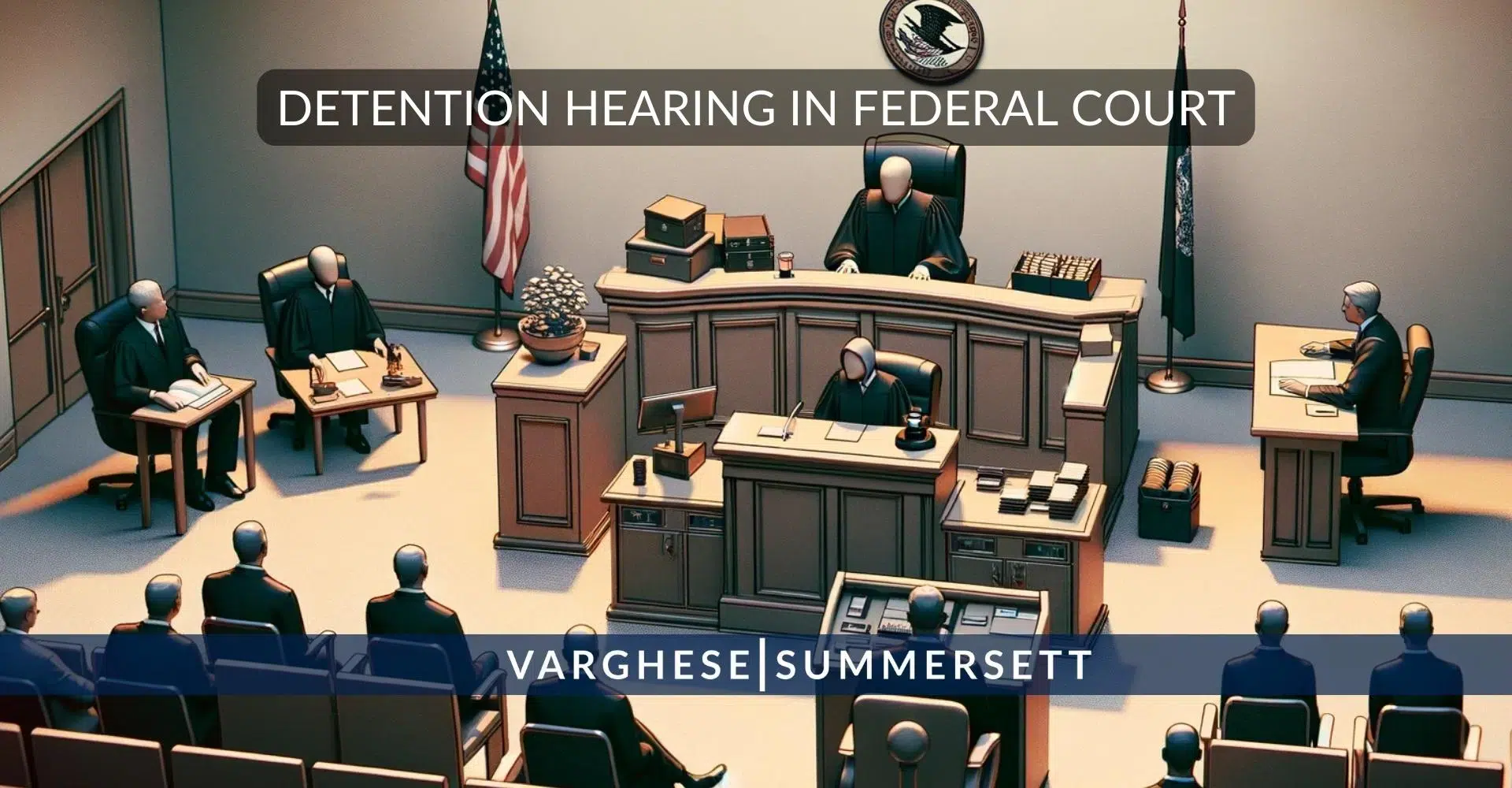
After arrest, you’ll appear before a U.S. Magistrate Judge who will advise you of the charges and your rights. The court will then determine whether you’ll be released or detained pending trial.
Under 18 U.S.C. § 3142(g), judges consider the nature of the offense, weight of evidence, your criminal history, employment, family ties, community connections, and whether you pose a flight risk or danger. Drug cases carry a presumption of detention that we must overcome with compelling evidence.
Our attorneys prepare extensively for detention hearings. We gather employment records, family support letters, and evidence of community ties. We’ve secured release for clients in cases where detention seemed certain.
Arraignment and Discovery
At arraignment, you enter a plea of guilty or not guilty. We almost always enter a not guilty plea initially, which preserves all options while we review the government’s evidence.
Federal discovery under Rule 16 of the Federal Rules of Criminal Procedure can be massive. White-collar cases involving bank fraud, healthcare fraud, or tax evasion often include hundreds of thousands of documents. Our team has the resources and experience to analyze complex financial records, identify weaknesses in the government’s case, and develop effective defense strategies.
Plea Negotiations
Federal plea bargaining works differently than in Texas state court. You won’t receive a specific sentence offer in exchange for your plea. Instead, you’ll plead guilty with uncertainty about the final outcome.
The statistics here are sobering. In FY 2023, 99.1% of federal defendants in Texas pleaded guilty, compared to 97.2% nationally. Only 141 federal criminal trials occurred across all four Texas districts that year. The government may agree to drop certain counts, recommend a lower sentence, or file a motion for downward departure based on your cooperation. Under Rule 11(c)(1)(C), binding plea agreements that specify a sentence are possible but rare.
One important consideration: cooperation may be less valuable in Texas than elsewhere. Substantial assistance departures under §5K1.1 occur in only 5.5% of Texas cases, compared to 10.2% nationally. This suggests either fewer cooperation opportunities or a more restrictive approach to rewarding defendants who help the government. If cooperation is part of your strategy, you need an attorney who understands how to negotiate these agreements effectively in Texas federal courts.
Our attorneys negotiate aggressively to secure the best possible terms. We also advise clients honestly about whether trial or a plea serves their interests.
Federal Jury Trials
If your case goes to trial, the stakes couldn’t be higher. Federal prosecutors win over 90% of cases that reach trial. They’re well-funded, thoroughly prepared, and experienced.
Our trial attorneys have tried hundreds of federal and state jury cases. We know how to select juries, cross-examine government witnesses, challenge forensic evidence, and present compelling closing arguments. We prepare every case as if it’s going to trial, even while pursuing negotiated resolutions.

How Does Federal Sentencing Work in Texas?
Federal sentencing begins with the United States Sentencing Guidelines. A probation officer interviews you, reviews your criminal history, and prepares a Pre-Sentence Report (PSR) that calculates your guideline range. This range depends on two factors: your offense level (based on the crime’s severity) and your criminal history category.
Texas sentences more severely than most jurisdictions. According to U.S. Sentencing Commission data, 94.1% of federal defendants in Texas receive prison-only sentences, compared to 89.8% nationally. Texas defendants are half as likely to receive probation-only sentences (3.2% versus 5.9% nationally). Only 2.6% of Texas defendants receive any form of alternative sentence, compared to 10.2% nationally. Texas accounts for approximately 14.6% of the entire federal prison population despite representing only 9% of the U.S. population.
How Long Are Federal Prison Sentences in Texas?
Texas imposes significantly longer sentences than the national average for several serious offense categories:
| Crime Type | Texas Mean Sentence | National Mean Sentence | Difference |
|---|---|---|---|
| Drug Trafficking | 97 months (8+ years) | 82 months | +18% |
| Child Pornography | 161 months (13+ years) | 115 months | +40% |
| Sexual Abuse | 247 months (20+ years) | 213 months | +16% |
| Arson | 87 months (7+ years) | 58 months | +50% |
| Murder | 309 months (25+ years) | 285 months | +8% |
| Robbery | 120 months (10 years) | 110 months | +9% |
The disparity in incarceration rates is also stark. Texas defendants convicted of drug trafficking receive prison sentences 80% of the time, compared to 66% nationally. For firearms offenses, Texas imprisons defendants at a rate of 66.7%, versus 42.1% nationally. That’s a 24.6 percentage point difference.
Do Texas Judges Follow Sentencing Guidelines More Strictly?
Yes. Texas judges sentence within the federal guideline range 64.4% of the time, compared to only 42.4% nationally. That’s a 22 percentage point difference. Texas judges also grant fewer downward variances (sentences below the guidelines). The variance rate in Texas is 20.6%, compared to 33.1% nationally.
When Texas judges do depart from the guidelines, they’re more likely to go up than down. Texas has an upward variance rate of 4.9%, compared to 3.0% nationally. This means your guideline calculation isn’t just a starting point in Texas. It’s likely to be close to your actual sentence.
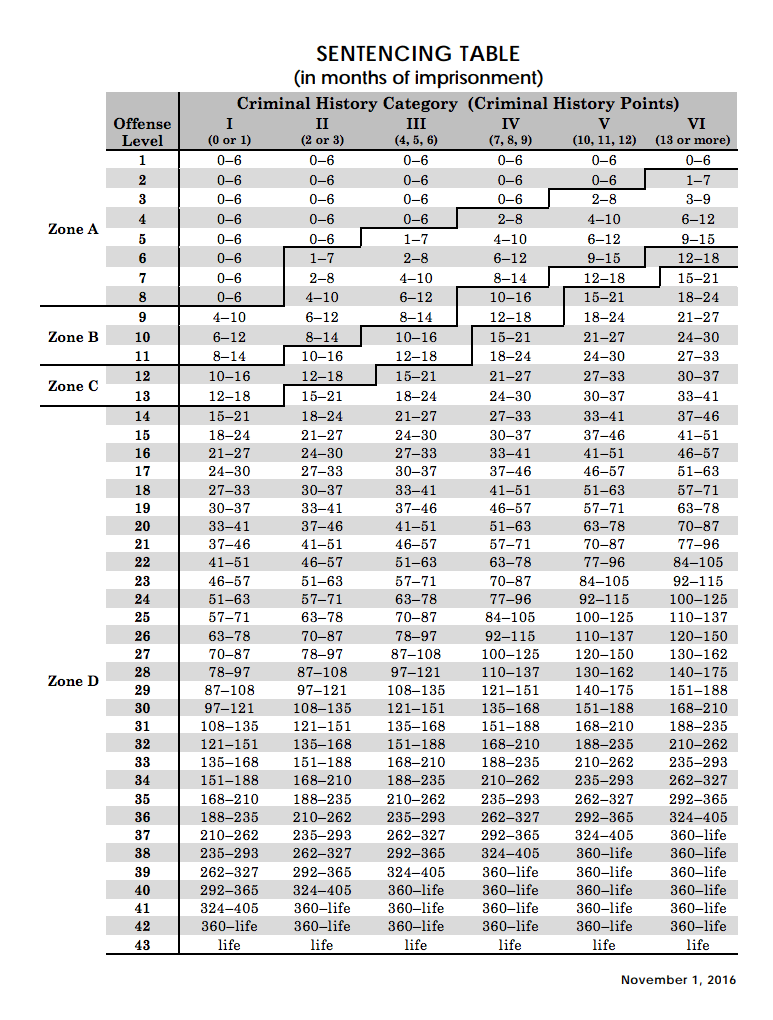
Since the Supreme Court’s decision in United States v. Booker, 543 U.S. 220 (2005), the guidelines are advisory, not mandatory. Judges must consider them but can impose sentences above or below the recommended range based on the factors in 18 U.S.C. § 3553(a). These factors include the nature of the offense, your personal history and characteristics, the need for deterrence, and the goal of avoiding unwarranted sentencing disparities.
A skilled federal criminal defense lawyer can present mitigating evidence, object to PSR inaccuracies, and argue for a sentence below the guidelines. We submit detailed sentencing memoranda and character letters. We challenge enhancement calculations. We present our clients as complete human beings, not just case numbers. This work can mean the difference between a decade in prison and a few years.
What Types of Federal Cases Are Most Common in Texas?
Texas federal dockets look different from the rest of the country. Immigration cases dominate, accounting for 65% of all Texas federal prosecutions compared to 29.9% nationally. Drug trafficking represents 17.6% of cases. Firearms prosecutions make up 5.6%, with fraud, theft, and embezzlement at 3.1%.
Our federal criminal defense lawyers handle the full range of federal offenses prosecuted in Texas, including:
- Drug trafficking and conspiracy (DEA cases)
- Bank fraud, wire fraud, and mail fraud
- Healthcare fraud and Medicare/Medicaid fraud
- Tax evasion and IRS investigations
- Money laundering
- RICO and organized crime
- Firearms offenses (ATF cases)
- Child pornography and exploitation
- Public corruption and bribery
- Immigration crimes
- White-collar offenses and securities fraud
Which Federal Court Will Handle My Case?
Texas is divided into four federal judicial districts, each with distinct caseloads and practices:
Western District of Texas: The largest federal criminal docket in the state with 7,539 cases in FY 2023, representing 46.4% of all Texas federal prosecutions. Includes San Antonio, El Paso, Austin, Midland, Del Rio, Pecos, and Waco divisions. The Western District had 9,291 federal arrests that year and a 99.2% guilty plea rate.
Southern District of Texas: The second largest with 6,425 cases (39.6% of Texas total). Includes Houston, Galveston, Brownsville, Corpus Christi, Laredo, McAllen, and Victoria divisions. This district processes cases fastest, with a median of 21 days from investigation to prosecutorial decision. It has the highest guilty plea rate at 99.3%.
Northern District of Texas: Handles 1,559 cases annually (9.6% of Texas total). Includes Dallas, Fort Worth, Amarillo, Lubbock, Abilene, San Angelo, and Wichita Falls divisions. This district has a more diverse case mix and a slightly higher trial rate at 1.5%.
Eastern District of Texas: The smallest with 716 cases (4.4% of Texas total). Includes Tyler, Beaumont, Sherman, Texarkana, Lufkin, and Marshall divisions. This district has the highest rate of within-guidelines sentencing at 60.6%.
We practice in federal courts across all four Texas districts. We know the judges, the prosecutors, and the local practices that can affect your case.
Why Choose Varghese Summersett for Federal Defense?
We understand federal prosecution because we’ve been on the other side. Our team includes a former Assistant United States Attorney who prosecuted federal cases. We have former federal public defenders who know how to fight the government with limited resources. Our board-certified criminal law specialists have tried hundreds of jury trials.
With more than 70 attorneys and staff across four Texas offices in Fort Worth, Dallas, Houston, and Southlake, we have the depth to handle complex federal cases that would overwhelm smaller firms. We respond quickly because we know federal timelines don’t wait.

Frequently Asked Questions About Federal Criminal Defense
What’s the difference between state and federal criminal charges?
State charges involve violations of Texas law and are prosecuted by county or district attorneys in state court. Federal charges involve violations of United States law and are prosecuted by Assistant United States Attorneys in federal district court. Federal cases typically involve longer investigations, harsher sentencing guidelines, and higher conviction rates. Texas federal prosecutors pursue charges at rates between 77% and 82%, compared to 61% nationally.
Is Texas tougher on federal defendants than other states?
Yes, by almost every measure. Texas defendants receive prison-only sentences 94.1% of the time versus 89.8% nationally. Texas judges follow sentencing guidelines more strictly (64.4% within range versus 42.4%). Texas has a higher upward variance rate (4.9% versus 3.0%), meaning judges here are more likely to exceed the guidelines. For specific crimes, the differences are stark: Texas imposes drug trafficking sentences averaging 97 months compared to 82 nationally, child pornography sentences of 161 months versus 115, and firearms incarceration rates of 66.7% versus 42.1%.
Can I get bond in a federal case?
Unlike Texas state court, there’s no automatic right to bond in federal cases. Under 18 U.S.C. § 3142, judges must determine whether any conditions of release can reasonably assure your appearance and community safety. Drug cases and violent offenses carry a presumption of detention. However, release is possible with strong evidence of community ties, employment, and low flight risk.
How long do federal cases take in Texas?
Federal cases move faster in Texas than almost anywhere else. In the Southern and Western Districts, cases move from investigation to prosecutorial decision in a median of 21 to 25 days, compared to 61 days nationally. The national median time from case filing to disposition is 316 days (about 10.5 months), though Texas’s high plea rate and fast-track programs suggest cases here resolve faster.
What happens if I’m convicted of a federal crime?
Federal convictions carry serious consequences. In Texas, 94.1% of defendants receive prison-only sentences, and only 2.6% receive any form of alternative sentence. Sentences are calculated using the Federal Sentencing Guidelines, which consider the offense severity and your criminal history. Texas judges follow these guidelines more strictly than judges nationally (64.4% within-guidelines sentencing versus 42.4%).
The national median time served varies significantly by offense type: 55 months for drug offenses, 45 months for weapons charges, 21 months for property/fraud crimes, and 11 months for immigration offenses. U.S. citizens serve longer sentences on average (median 50 months) than non-citizens (median 15 months). After release, you’ll serve a period of supervised release and may face collateral consequences including loss of voting rights, firearm restrictions, and immigration consequences.
Should I cooperate with federal agents?
You should never speak to federal agents without an attorney present. Anything you say can be used against you, and even innocent misstatements can result in additional charges under 18 U.S.C. § 1001. Politely decline to answer questions and contact a federal criminal defense lawyer immediately. Note that cooperation agreements may be harder to secure in Texas. Substantial assistance departures occur in only 5.5% of Texas cases, compared to 10.2% nationally.
Contact Our Federal Criminal Defense Lawyers Today
If you’re under federal investigation or have been charged with a federal crime in Texas, time matters. Cases here move faster than anywhere else in the country. Prosecutors pursue charges more aggressively. Judges follow sentencing guidelines more strictly. The earlier we can intervene, the more options we have to protect you.
Our federal criminal defense lawyers offer free, confidential consultations where we’ll discuss your situation, explain the legal issues, and outline potential defense strategies. Call (817) 203-2220 now. We answer 24/7.

Federal Criminal Defense Practice Areas
Experienced federal defense attorneys serving Texas
Fraud
White Collar Crimes
Drug Crimes
Firearms
Other Federal Crimes
Federal Investigations
Federal Court Process
Federal Sentencing
Appeals & Post-Conviction
Federal Court Resources
Under federal investigation? Call now for a confidential consultation.