
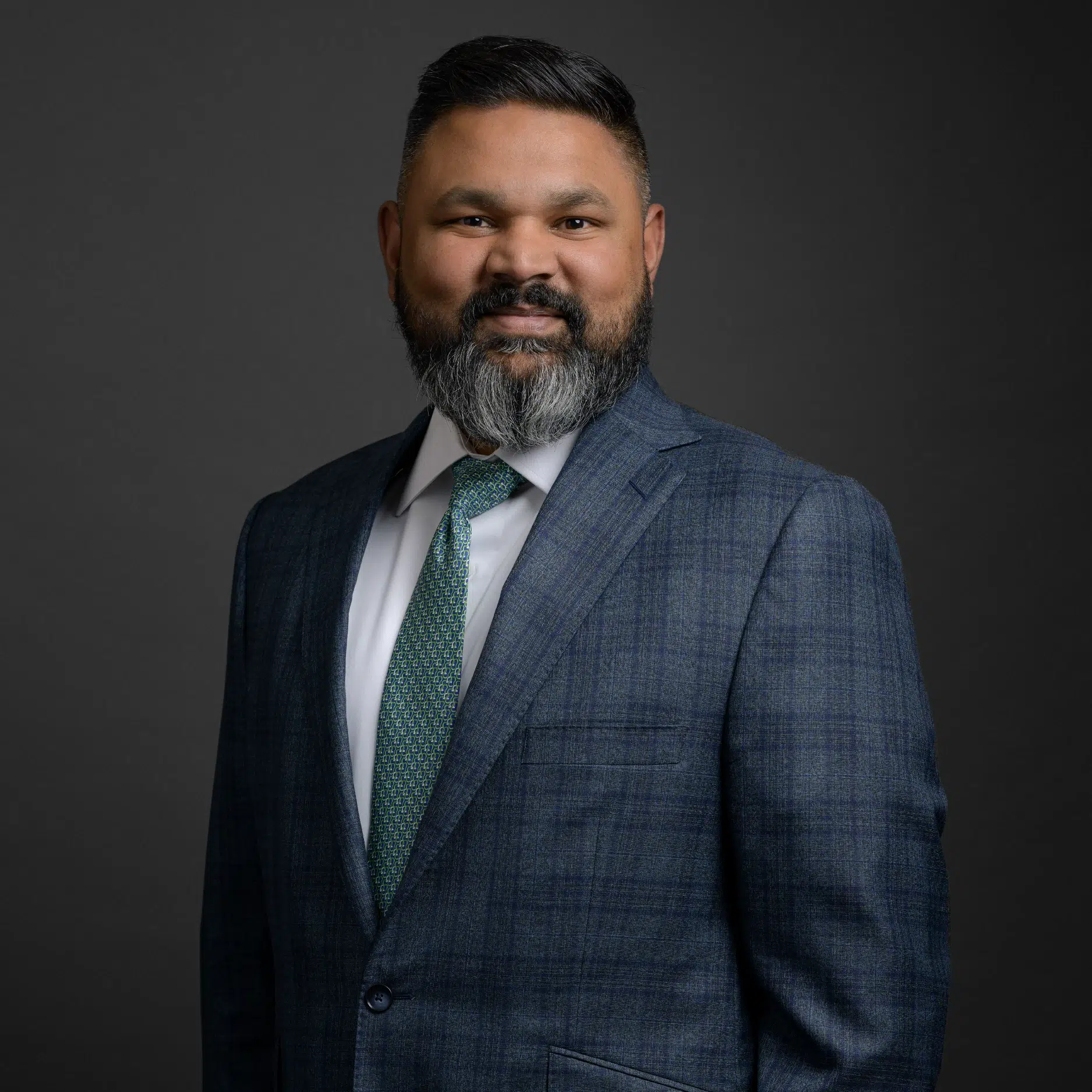
Ty Stimpson
Partner · Dallas Office
- Former Dallas County prosecutor
- Handles serious sex crime allegations in Dallas County
- Trial-tested in felony courts
An accusation is not a conviction. We try these cases. And we win.

If you have been accused of sexual assault in Dallas, what you do in the next 48 hours can decide the next 20 years. A detective may invite you to give your side of the story. CPS may show up at your door. A warrant may already be in motion. The single most important move is to say nothing and call a Dallas sexual assault lawyer before you answer any questions.
Varghese Summersett defends these cases every day in Dallas County. Our team includes former Dallas County prosecutors, three partners are Board Certified in Criminal Law, and our Dallas office at 2100 Ross Avenue sits minutes from the Frank Crowley Courts Building, where Dallas County felony sexual assault cases are heard.
Our client was charged with continuous sexual abuse of a young child involving two child complainants, the most serious sexual offense in the Texas Penal Code short of capital murder. The punishment range is 25 years to life with no possibility of parole. There is no probation. A conviction is a life sentence in every way that matters.
Prosecutors argue that the sheer volume of accusations proves guilt. We made the opposite case to the jury: volume is not the same as quality of evidence, and two weak accounts do not add up to proof beyond a reasonable doubt. We ran our own investigation, examined how each outcry developed and who shaped it, and tested every assumption the State's case rested on.
That is the difference between managing a plea and making the State prove a case it cannot prove.
We took it to trial and won. Not guilty. No conviction. No registration. No prison. That willingness to go to verdict is also why we secure dismissals, grand jury no-bills, and reductions before trial. When the Dallas County District Attorney's Office knows your lawyer is ready and able to try the case, it changes how they negotiate.
The presumption of innocence disappears the moment the allegation surfaces. Our job is to put it back.
Benson Varghese, Socio DirectorThe right defense depends on the facts, and knowing which one fits your case is the whole job. These are the defenses we use most in Dallas County sexual assault cases. Open each one to see how it works.
In adult cases, the State must prove the act happened without consent. Texts, messages, witness accounts, and the timeline before and after the encounter often tell a very different story than the allegation. We build that record before the State locks in its narrative.
False allegations happen more often than people want to believe, and the motivations are familiar: custody fights, divorces, breakups, revenge, and mental health crises. We investigate the accuser's motive, prior statements, and the circumstances of the outcry, and we expose the inconsistencies in front of the grand jury or the jury.
In child cases, the forensic interview is the State's foundation. Suggestive questioning, coaching by an adult in the child's life, and interviews that ignore alternative explanations can all shape a child's account. Our attorneys include former prosecutors who used these interviews to build cases. Now we take them apart.
SANE examinations, DNA mixtures, and medical findings are not as conclusive as the State presents them. DNA can be explained by innocent contact or contamination, and medical findings often have non-abusive explanations. We work with independent experts to test whether the physical evidence actually supports the allegation or simply fails to rule anything out.
Unlawful searches of phones and devices, Miranda violations, and coerced statements can be suppressed, sometimes leaving the State unable to proceed. We scrutinize how every piece of evidence was obtained.
In statutory cases, Texas recognizes an affirmative defense when the accused is not more than three years older than a willing partner who is at least 14, and other conditions are met. Close-in-age, lawful-spouse, and medical-care defenses can apply in the right cases. Note that Texas has no mistake-of-age defense, so whether one of these applies turns on details a lawyer needs to evaluate quickly.
Most sexual assault cases come down to one person's word, with no physical evidence. The State still has to prove every element beyond a reasonable doubt. When the evidence is thin, contradictory, or unlawfully obtained, we move to suppress it, present to the grand jury, or push the case to trial. This is the principle behind the acquittal above.
Talk to a lawyer before you speak to police. A single statement can undermine the strongest defense. Call (214) 903-4000 for a free consultation.
These are representative outcomes our attorneys have obtained in sexual assault and sex crime cases. The results are real.
Past results do not guarantee future outcomes. Every case is decided on its own facts. See more on our results page.
Police investigations in these cases are one-sided. Once an allegation is made, investigators work to confirm it, not to question it. So we run our own investigation, with experienced private investigators and experts, aimed at the evidence the State never looked for.
We reconstruct how the allegation came about: who the child or accuser first told, what was asked, who was present, and what was happening in the family at the time. Then we scrutinize the forensic interview itself for suggestive questioning and ignored alternatives.
Texts, social media, photos, and location history frequently contradict an allegation outright. We move fast to preserve digital evidence before it disappears, on both sides of the case.
We retain independent experts to review SANE findings, DNA analysis, and medical records. The question is never whether the State has an expert. It is whether the science actually says what the State claims it says.
We interview the witnesses police skipped and build a minute-by-minute timeline. Inconsistencies between the allegation and the verifiable record are often what persuades a grand jury to no-bill.
Most defense lawyers wait for the indictment. When the facts support it, we prepare a grand jury packet and present the exculpatory evidence prosecutors would never volunteer. Our no-bills in sexual assault cases came from exactly this work.
If the case must be tried, we prepare it like the trial starts tomorrow. We prepare clients and test the defense in front of people who have tried hundreds of cases.
Our attorneys analyzed more than 64,000 bonds set in Dallas County between January and September 2025. Sexual offenses carried an average bond of about $72,000, nearly double the countywide average of roughly $42,750. The takeaway for anyone accused in Dallas is simple: prosecutors file these cases aggressively and judges set high bonds from the moment of arrest. Early, experienced defense matters.
| Ofensa | Bono medio | Bono más común |
|---|---|---|
| Continuous Sexual Abuse of a Child Under 14 | $170,241 | $100,000 |
| Agresión sexual con agravantes a un menor | $163,616 | $100,000 |
| Sexual Performance by a Child Under 14 | $158,333 | $200,000 |
| Posesión de pornografía infantil | $125,000 | $100,000 |
| Agresión sexual a un menor | $114,667 | $50,000 |
| Indecency With a Child (Contact) | $112,481 | $50,000 |
| Agresión sexual (víctima adulta) | $81,233 | $100,000 |
| Indecency With a Child (Exposure) | $53,198 | $25,000 |
| Captación de menores por Internet | $52,143 | $50,000 |
These are starting points. At your first appearance, a Dallas sexual assault lawyer can argue for a reduced bond based on community ties, employment, and lack of criminal history.
Knowing the road ahead takes some of the fear out of it. Here is how a sexual assault case typically moves through Dallas County, and where we step in at each stage.
A report is made to the Dallas Police Department or another Dallas County agency. If the accuser is a child, investigators typically arrange a forensic interview at the Dallas Children's Advocacy Center. Expect CPS involvement if you have children or live with children.
Detectives commonly invite the accused to come in and give their side of the story. You will leave that meeting without handcuffs, but an arrest is likely already coming. This is the single most important window for a defense lawyer to get involved. Do not attend without counsel.
If a magistrate signs a warrant, you are booked at the Lew Sterrett Justice Center in downtown Dallas, where bond and conditions are set, often including no-contact orders, GPS monitoring, and internet restrictions. We can often negotiate a self-surrender so you are not arrested at work or in front of your family, and we fight for a bond you can live with.
Every Texas felony must be presented to a grand jury before trial, often through the Dallas County District Attorney's specialized child abuse unit. This is a critical opportunity. We have persuaded Dallas County grand juries to no-bill allegations, ending cases before an indictment was ever filed.
If indicted, your case is assigned to a Dallas County Criminal District Court at the Frank Crowley Courts Building, 133 N. Riverfront Boulevard. Discovery, pretrial motions, and negotiation happen here, and most of the work that wins a case happens in this stage.
Cases end in dismissal, reduction, a negotiated outcome, or trial. Sexual assault cases in Dallas County routinely take a year or longer, and we prepare every case as if a jury will decide it.
While the case is pending, courts impose strict bond conditions in sex offense cases: no contact with the accuser, restrictions on being near places where children gather, curfews, and monitored internet use. Violating any condition can put you back in jail, so we make sure every condition is clear and as livable as possible. From our downtown office, we represent clients across Dallas County, including Oak Cliff, Oak Lawn, Lakewood, Preston Hollow, Far North Dallas, Garland, Irving, Mesquite, Grand Prairie, Richardson, Carrollton, Highland Park, and University Park.
2100 Ross Avenue, Suite 950
Dallas, Texas 75201
When you hire us, you get a team, not a single lawyer with a full calendar. Every senior attorney at the firm began their career as a prosecutor, and our team includes lawyers who prosecuted crimes against children. We know exactly how the other side builds a sexual assault case, because we used to build them.
Our senior attorneys have tried more than 750 cases to Texas juries, and three partners hold Board Certification in Criminal Law from the Texas Board of Legal Specialization, a credential fewer than 10% of Texas attorneys earn. We appear in Dallas County courtrooms regularly, and we know how the local judges and prosecutors handle these cases.
Unlike high-volume firms that treat clients like case numbers, we limit our caseload. You will always know what is happening in your case, what your options are, and what we recommend. And we understand what these accusations do to families: discreet, judgment-free representation is part of the job.
Sexual assault defense is its own discipline. The lawyers below include former Dallas County prosecutors who handled crimes against children for the State and now defend the accused.

If you want the legal detail behind your charge, start with the table, then open the topic you need. Each offense links to a detailed guide. Registration consequences are governed by Chapter 62 of the Texas Code of Criminal Procedure.
| Ofensa | Nivel | Rango del castigo | Inscripción |
|---|---|---|---|
| Sexual Assault (§ 22.011) | Delito grave de segundo grado | 2 to 20 years, up to $10,000 fine | Sí |
| Aggravated Sexual Assault (§ 22.021) | Delito en primer grado | De 5 a 99 años o de por vida | Sí |
| Sexual Assault of a Child (under 17) | Delito grave de segundo grado | De 2 a 20 años | Sí |
| Aggravated Sexual Assault of a Child (under 14) | Delito en primer grado | 5 to 99 years or life; 25-year minimum in super aggravated cases | Sí |
| Continuous Sexual Abuse of a Young Child (§ 21.02) | Delito en primer grado | 25 years to life, no parole | Sí |
| Indecency with a Child by Contact (§ 21.11) | Delito grave de segundo grado | De 2 a 20 años | Sí |
| Indecency with a Child by Exposure (§ 21.11) | Delito grave de tercer grado | De 2 a 10 años | Sí |
| Agresión sexual (§ 22.012) | Delito menor de clase A | Up to 1 year jail, up to $4,000 fine | No (first offense) |
| Online Solicitation of a Minor (§ 33.021) | Delito grave de segundo grado | 2 to 20 years (first-degree if minor under 14) | Sí |
Under Texas Penal Code § 22.011, sexual assault involves penetration of the anus or sexual organ without consent, or contact between the mouth and sexual organ without consent. It is generally a second-degree felony carrying 2 to 20 years and a fine up to $10,000. The allegation alone, without physical evidence, is legally sufficient to support a warrant.
Under Texas Penal Code § 22.021, the charge becomes aggravated sexual assault when it involves serious bodily injury, a threat of death, a deadly weapon, drugging the victim, or a victim under 14, elderly, or disabled. It is a first-degree felony carrying 5 to 99 years or life.
Sexual contact with a person under 17 is sexual assault of a child regardless of consent, generally a second-degree felony. If the child is under 14, the charge becomes aggravated sexual assault of a child, a first-degree felony. For children under 6, or under 14 with aggravating factors, super aggravated sexual assault carries a 25-year minimum with no probation or parole.
When two or more qualifying acts are alleged over 30 or more days against a child under 14, prosecutors may charge continuous sexual abuse of a young child: 25 to life, no parole. Indecency with a child covers sexual contact without penetration (second-degree felony) and exposure with sexual intent (third-degree felony).
Texas also criminalizes online solicitation of a minor, possession or promotion of child pornography, sexual performance by a child, prohibited sexual conduct (incest), improper relationships between educators and students, invasive visual recording, unlawful disclosure of intimate material, and indecent assault, the Class A misdemeanor for unwanted intimate touching. Each carries its own penalty range and defense considerations.
The prison range is only part of it. A conviction for most sexual offenses requires sex offender registration under Chapter 62 of the Texas Code of Criminal Procedure, often for life, with restrictions on where you can live and work. The conviction itself can end careers, professional licenses, and custody rights. For non-citizens, a conviction can also trigger separate federal immigration consequences, including removal. Most of these convictions can never be expunged or sealed, which is why the fight happens now, not after.
A peer-reviewed distinction few Texas criminal defense firms can claim.
Board Certified criminal defense lawyer Benson Varghese explains how these investigations actually work, why the deck is so often stacked against the accused, and what to do the moment you learn of an allegation.

Do not speak to police or investigators without an attorney, and do not try to explain your side. Anything you say can be used against you. Politely decline questioning and call a Dallas sexual assault lawyer immediately at (214) 903-4000. Be cautious with calls from your accuser as well: Texas is a one-party consent state, and pretext calls are often recorded by detectives.
Dallas judges set high bonds because of the seriousness of the charges and the long potential sentences. Our analysis of more than 64,000 Dallas County bonds found an average sex-offense bond of about $72,000, nearly double the county average. At your first appearance, a defense attorney can argue for a reduction based on community ties, employment, and lack of criminal history.
Most sexual assault convictions require sex offender registration, and deferred adjudication does not avoid it. Some offenses do not require registration, and reduction to a non-registerable offense is sometimes possible. The surest way to avoid registration is to avoid conviction through dismissal, acquittal, or reduction.
For most sexual assault charges, a jury can recommend probation if you have never been convicted of a felony in Texas. However, certain offenses, including super aggravated sexual assault of a child and continuous sexual abuse of a young child, are not eligible for probation under any circumstances.
False accusations happen, especially amid divorces and custody disputes. We use investigators and forensic experts to expose inconsistencies, motive, and coaching. Dallas juries acquit when the evidence shows reasonable doubt, as our trial results demonstrate.
Most felony sexual assault cases in Dallas County take a year or longer to resolve. The timeline depends on the investigation, grand jury presentation, forensic testing, discovery, and the court's trial schedule. Cases that resolve at the grand jury stage end much sooner, which is one more reason early representation matters.
Felony sexual assault cases are presented to a grand jury and, if indicted, assigned to a Dallas County Criminal District Court at the Frank Crowley Courts Building, 133 N. Riverfront Boulevard, in Dallas. You are initially booked at the Lew Sterrett Justice Center, where bond is set. Our Dallas office is minutes from the courthouse.
Our Dallas office is at 2100 Ross Avenue, Suite 950, Dallas, TX 75201, in downtown Dallas near the Frank Crowley Courts Building. Call (214) 903-4000 for a free, confidential consultation.
Benson Varghese is the founder and managing partner of Varghese Summersett. He is Board Certified in Criminal Law by the Texas Board of Legal Specialization, has handled more than 100 jury trials in Texas state and federal courts, and serves as adjunct faculty at Baylor Law School. Read his full bio or connect on LinkedIn.
Published January 11, 2026 · Updated July 18, 2026