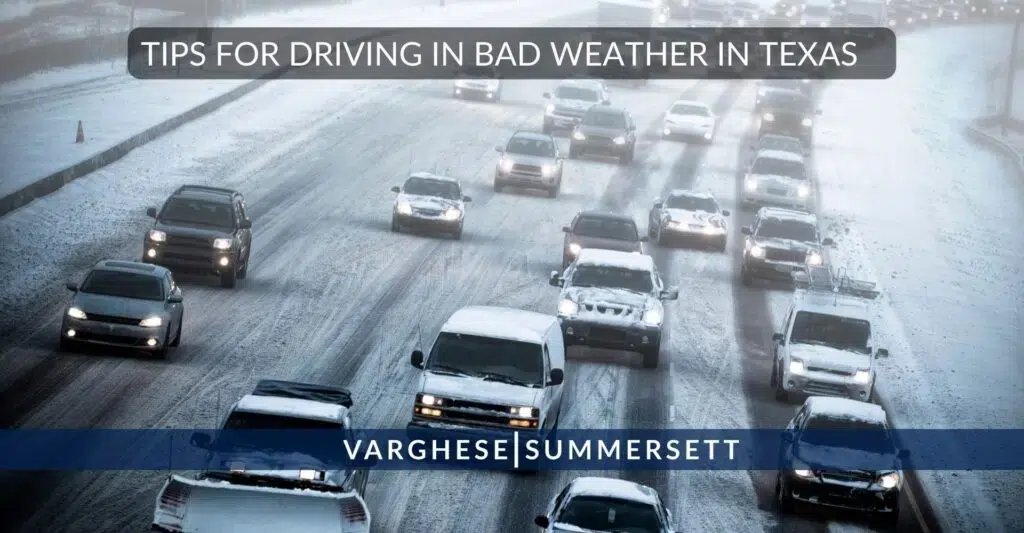
Texas weather can shift from sunny to freezing in hours, making hazardous driving conditions a year-round reality. According to the Texas Department of Insurance, 10 percent of all motor vehicle crashes in Texas are caused by poor weather. With a crash occurring roughly every 56 seconds statewide, knowing how to handle rain, ice, fog, and extreme heat isn’t just helpful. It can save your life.
Varghese Summersett’s Personal Injury Team has represented hundreds of Texans injured in weather-related accidents across Fort Worth, Dallas, Houston, and Southlake. While we’re always ready to fight for maximum compensation when things go wrong, we’d rather help you avoid a crash altogether. Here’s what you need to know about driving safely in every type of Texas weather.

What Are the Best Practices for Driving in Rain?
Rain is the most common weather hazard Texas drivers face. Wet roads reduce traction and increase stopping distances. The first 10 minutes of rain are often the most dangerous, as oil residue on the road mixes with water to create slick conditions.
Slow down and increase your following distance. Turn on your headlights, even during daylight, to improve visibility. Use your windshield wipers and defroster to maintain a clear view.
Never use cruise control in rain. You need full control of your speed to react to changing conditions. Stay in the middle lane when possible, as water tends to pool in outer lanes near road shoulders.
If you start to hydroplane, ease off the gas pedal gradually. Don’t brake suddenly. Steer straight until your tires regain contact with the road.
Never drive through flooded roads. Just six inches of moving water can knock a person down, and twelve inches can sweep away a vehicle. If you can’t see the road surface through standing water, turn around and find another route. Drowning is the leading cause of flash flood deaths in Texas.
What Do You Do If Caught Driving in a Hailstorm?
Hail can damage your vehicle and injure you if it breaks through windows. When hail starts falling, find shelter immediately. Gas stations, parking garages, and covered areas offer protection.
Don’t stop under bridges or overpasses. This creates traffic hazards and offers less protection than you might think. If no shelter is available, pull over safely, turn on your hazard lights, and stay inside your vehicle with your seatbelt fastened.
Turn away from windows and cover yourself with a blanket or coat to protect against broken glass. Keep your back to windows if possible. Once the storm passes, inspect your vehicle for damage and take photos for your insurance claim.
If you must continue driving during hail, slow down significantly, increase following distance, and use hazard lights so other drivers can see you. Make gentle steering and braking movements to maintain control on potentially slick roads.
Can You Outrun a Tornado While Driving?
No. Never try to outrun a tornado. Tornadoes can change direction unpredictably and travel faster than highway speeds. They can also lift vehicles off the ground.
If you see a tornado or hear a warning while driving, seek sturdy shelter immediately. A reinforced building with a basement or interior room provides the best protection. Avoid bridges and overpasses, which offer no protection and can actually be more dangerous due to wind acceleration.
If no building is available and you can clearly see the tornado’s path, you may be able to drive at right angles away from its course. But if debris is falling or visibility is poor, stop immediately. Park your car away from trees and large objects, keep your seatbelt fastened, and duck below window level. Cover your head with your arms or a blanket.
Keep an emergency kit in your vehicle during tornado season, including water, food, a flashlight, and a first-aid kit. Check weather forecasts before traveling and know where shelter options exist along your route.
Why Should You Never Drive Through Flooded Roads?
“Turn around, don’t drown” isn’t just a slogan. It’s a survival rule. Floodwater hides road damage, debris, and depth. Six inches of fast-moving water can knock you off your feet. Twelve inches can float most vehicles. Two feet of moving water will carry away trucks and SUVs.
Never ignore road closure signs or drive around barriers. Authorities close roads because they know conditions are dangerous. The road surface may have washed away entirely beneath the water.
If your vehicle stalls in floodwater, abandon it immediately and move to higher ground. Floodwater can rise rapidly. A car can provide a false sense of security until water reaches the electrical system or engine, at which point doors become difficult to open.
If you’re trapped in a sinking vehicle, unbuckle your seatbelt, roll down windows (or break them with a tool designed for this purpose), and swim to safety once water pressure equalizes enough to open the door. Keep an emergency window breaker in your vehicle.
How Do You Handle Driving in High Winds?
Texas winds can gust above 50 mph, especially in West Texas and during spring storm season. High winds push vehicles off course, reduce visibility with dust and debris, and make large trucks unpredictable.
Grip your steering wheel firmly with both hands. Gusts can jerk your vehicle sideways without warning. Reduce your speed to maintain better control, and anticipate stronger gusts when passing through open areas, highway overpasses, and tunnel exits.
Give large trucks and buses extra space. High-profile vehicles are more susceptible to wind and may swerve into your lane. Avoid towing trailers or carrying roof-top cargo if possible, as these act like sails and make your vehicle harder to control.
Watch for debris on the road. Strong winds can blow tree branches, signs, and loose objects into your path. Keep your headlights on to increase visibility, especially when dust reduces sight lines.
If winds become severe, find a safe place to pull over away from trees, power lines, and anything that could fall on your vehicle. Consider delaying your trip until conditions improve.
How Do You Drive Safely in Snow in Texas?
Snow in Texas is rare but dangerous. Most Texas drivers have little experience with winter conditions, and our roads lack the salt trucks and de-icing infrastructure common in northern states. When snow hits, slow down significantly and leave at least three times your normal following distance.
Use gentle inputs on the steering wheel, brakes, and accelerator. Sudden movements cause skids. If you start sliding, stay calm and steer in the direction you want to go. Don’t slam the brakes or overcorrect.
Keep your headlights on even during daylight hours. This makes you visible to other drivers who may be struggling to see through falling snow. If conditions become severe, pull over safely and wait. No destination is worth risking your life.
Before winter weather arrives, equip your vehicle with an emergency kit containing blankets, water, non-perishable food, a flashlight, and a first-aid kit. Check weather reports before traveling and consider postponing trips when forecasts show heavy snow.
What Is the Safest Way to Drive on Ice in Texas?
Ice presents unique dangers because it’s often invisible. Black ice forms on bridges, overpasses, and shaded road sections without warning. The February 2021 North Texas ice storm that caused a 100-vehicle pileup and killed six people demonstrated how deadly these conditions can be.
When driving on ice, reduce your speed well below the posted limit. Stopping distances on ice can be ten times longer than on dry pavement. Brake gently and early. If you have anti-lock brakes (ABS), press the pedal firmly. Without ABS, pump the brakes gently.
Avoid hills and steep roads when possible. If you must travel on inclines, use lower gears for better control. Stay alert for ice patches, especially during early morning hours when temperatures drop.
The safest approach is staying home when ice is forecast. If you must drive, steer clear of 18-wheelers. Large trucks take much longer to stop and are more likely to jackknife on slick roads.
What Should You Do If You’re Injured in a Weather-Related Accident?
If you’re involved in a weather-related crash, your first priority is safety. Check for injuries and move to a safe location if possible. Then call 911 to report the accident and request medical assistance. A police report becomes critical evidence for insurance claims and potential lawsuits.
Document everything at the scene. Take photos of all vehicles, road conditions, weather conditions, and any visible injuries. Exchange information with other drivers, including names, phone numbers, and insurance details. Collect witness contact information if available.
Don’t apologize or admit fault. Even a simple “I’m sorry” can be used against you later. Let investigators determine responsibility.
Seek medical attention even if you feel fine. Injuries like whiplash, concussions, and internal bleeding often don’t show symptoms immediately. Medical records also serve as important evidence for your claim.
Contact a personal injury attorney before speaking with insurance companies. Insurers work to minimize payouts. An experienced attorney protects your rights and helps you pursue full compensation. Call Varghese Summersett at 817-203-2220 for a free consultation.
Watch this video from attorney Ty Stimpson, who leads our personal injury team, about common mistakes to avoid after an accident:
How Should You Drive in Foggy Conditions?
Fog drastically reduces visibility and makes it difficult to judge distances. Use your low beams or fog lights. High beams reflect off fog particles and actually reduce what you can see.
Slow down significantly and keep at least five seconds of following distance behind the vehicle ahead. Rely on road markings to guide your position since it’s harder to judge lane boundaries in fog.
Listen for traffic you can’t see. Roll your window down slightly to hear other vehicles, emergency sirens, and horns. Avoid sudden braking or steering, as drivers behind you may not see your vehicle until it’s too late.
If fog becomes too dense to continue safely, pull completely off the road into a parking lot or rest area. Turn off your driving lights and use hazard lights instead. Leaving driving lights on while parked can confuse other drivers and cause them to rear-end your vehicle.
How Do You Prepare Your Vehicle for Extreme Texas Heat?
Texas summers routinely push temperatures above 100°F. Heat affects both your vehicle’s performance and your physical wellbeing. Before summer driving, check your coolant levels, engine oil, and air conditioning system.
Monitor your temperature gauge while driving. If it starts climbing toward hot, turn off the air conditioner and turn on the heater. This draws heat away from the engine. Pull over safely if the gauge reaches dangerous levels to avoid engine damage.
Carry plenty of water for yourself and passengers. Dehydration impairs driving ability and can lead to heat exhaustion. Use sunshades when parked to keep interior temperatures manageable. Park in shade when available.
Never leave children or pets in a parked vehicle. Interior temperatures can reach 120°F within minutes, even with windows cracked. Heatstroke deaths in vehicles occur every year in Texas.
Plan trips during cooler morning or evening hours when possible. Know the signs of heat exhaustion, including dizziness, nausea, and headache. If you experience these symptoms, pull over, get into shade or air conditioning, and hydrate.
What Are the Most Common Mistakes Drivers Make in Bad Weather?
Overconfidence is the biggest mistake. Four-wheel drive helps you accelerate in slick conditions, but it doesn’t help you stop or turn. All vehicles lose traction on wet, icy, or snow-covered roads regardless of drivetrain.
Driving too fast for conditions causes many weather-related crashes. The speed limit assumes dry roads and good visibility. When conditions deteriorate, safe speeds drop dramatically. Following too closely compounds this problem by eliminating reaction time.
Using high beams in fog or heavy rain reduces visibility instead of improving it. Light reflects off water particles and creates glare. Use low beams or fog lights instead.
Failing to prepare vehicles for weather conditions leads to preventable breakdowns. Worn tires lose traction quickly on wet roads. Low washer fluid leaves windshields dirty. Dead batteries strand drivers in dangerous conditions.
Ignoring weather warnings puts lives at risk. If authorities advise staying home, take that advice seriously. No appointment or errand is worth dying for.
Who Is Liable for Weather-Related Car Accidents in Texas?
Bad weather doesn’t automatically eliminate liability. Under Texas law, drivers must adjust their behavior to match road conditions. A driver who speeds on icy roads, fails to use headlights in rain, or follows too closely in fog can be held negligent even though weather contributed to the crash.
Texas follows a modified comparative negligence rule under Texas Civil Practice and Remedies Code Chapter 33. Each party in an accident can be assigned a percentage of fault based on their actions. You can recover damages as long as you are less than 51 percent responsible for the accident. Your compensation is reduced by your percentage of fault.
For example, if another driver caused 70 percent of a crash by speeding on wet roads, but you were 30 percent at fault for not signaling a lane change, you could still recover 70 percent of your damages.
Proving fault in weather-related crashes requires evidence: police reports, witness statements, photos of road conditions, weather data, and sometimes accident reconstruction experts. An experienced personal injury attorney can gather this evidence and build a strong case.
What Damages Can You Recover After a Weather-Related Car Accident?
If another party’s negligence contributed to your weather-related crash, and you are less than 51 percent at fault, Texas law allows you to pursue three types of damages.
Economic damages cover your financial losses. This includes medical bills (past and future), lost wages, reduced earning capacity, property damage, and out-of-pocket expenses related to your injury. These damages are calculated from receipts, bills, pay stubs, and expert projections.
Non-economic damages compensate for losses that don’t have receipts. Pain and suffering, emotional distress, loss of enjoyment of life, disability, disfigurement, and loss of consortium fall into this category. While harder to quantify, these damages are often substantial in serious injury cases.
Punitive damages may apply when the at-fault driver’s behavior was especially reckless or malicious. Also called exemplary damages, these are designed to punish wrongdoers and deter similar conduct. They’re not awarded in every case and require clear evidence of egregious misconduct.
How Can Varghese Summersett Help After a Weather-Related Crash?
Varghese Summersett personal injury attorneys have helped hundreds of Texas families recover compensation after weather-related accidents. Our team includes attorneys with decades of combined experience handling complex personal injury claims in Fort Worth, Dallas, Houston, and Southlake.
We conduct thorough investigations of every crash, gathering police reports, medical records, weather data, witness statements, and expert opinions. We identify all liable parties and all available insurance coverage. We handle negotiations with insurance companies who routinely try to minimize payouts or shift blame to victims.
If a fair settlement isn’t possible, we’re prepared to take your case to trial. Our attorneys have won significant verdicts for clients across Texas.
We offer free consultations and work on contingency. You pay nothing upfront or out-of-pocket. We only get paid if we recover compensation for you.
Call 817-203-2220 today to discuss your case. We handle weather-related accident claims throughout Texas.
Frequently Asked Questions About Driving in Bad Weather
What is the number one cause of weather-related crashes in Texas?
Rain is the leading cause of weather-related crashes in Texas. Wet roads reduce traction and increase stopping distances. The first 10 minutes after rain begins are often the most dangerous due to oil mixing with water.
How much does weather increase accident risk in Texas?
Weather conditions contribute to approximately 10 percent of all vehicle crashes in Texas, according to the Texas Department of Insurance. With a crash occurring every 56 seconds statewide, that represents thousands of weather-related accidents annually.
Can I sue another driver if weather caused our accident?
Yes, if the other driver was negligent. Texas law requires drivers to adjust their behavior to match road conditions. Speeding on wet roads, following too closely in fog, or failing to use headlights in rain can make a driver liable even when weather contributed to the crash.
What should I do immediately after a weather-related accident?
First, check for injuries and move to safety. Call 911 to report the accident. Document the scene with photos showing vehicles, damage, road conditions, and weather. Exchange information with other drivers. Seek medical attention even if you feel fine. Contact a personal injury attorney before speaking with insurance companies.
How long do I have to file a lawsuit after a car accident in Texas?
Texas has a two-year statute of limitations for personal injury claims under Texas Civil Practice and Remedies Code Section 16.003. You must file your lawsuit within two years of the accident date or you lose your right to sue. Contact an attorney as soon as possible to protect your claim.
